
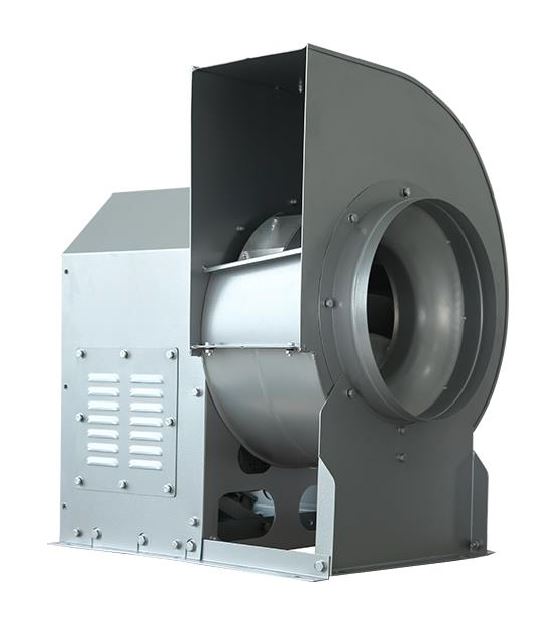
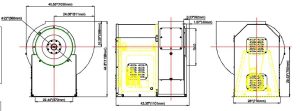
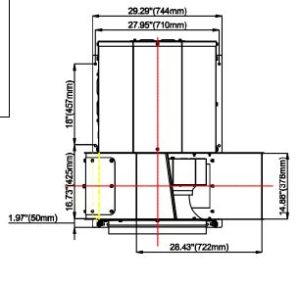
Centrifugal utility blower with a backward-curved wheel. It holds its airflow better than a plain axial fan when the duct is long or has filters and bends. It moves 10,000 CFM (about 16,990 m³/h) with a 4 HP motor.
Specifications
| Item | Value |
|---|---|
| Model | CBA-TK-20 |
| Airflow | 10,000 CFM (≈ 16,990 m³/h) |
| Power | 4 HP |
| Fan type | Centrifugal, backward-curved wheel |
| Housing | 2.5 mm carbon steel, powder-coated (stainless steel on request) |
| Drive | Belt or direct drive |
| Max. wheel speed | 1,500 RPM |
| Weight without motor | approx. 105 kg |
| Discharge positions | 8 positions, clockwise or counter-clockwise |
Where it is used
- Large central kitchens and catering facilities.
- Industrial exhaust with filter banks.
- Long duct systems serving several hoods.
When to choose a utility blower
Choose a utility blower instead of an upblast roof fan when the exhaust has to pass through filters, many bends or a long duct, typically three floors or more. The centrifugal wheel builds more pressure, so the airflow drops less.
Quick sizing: required airflow (m³/h) = room volume (m³) × air changes per hour. Example: a 300 m² room with a 3 m ceiling at 15 air changes per hour needs about 13,500 m³/h. Long ducts, bends and filters reduce the real airflow, so choose a fan with some margin above the calculated figure.
Choosing the size
For less airflow, Exhaust Utility Fan 18 – 5.5HP (9,000 CFM, 5.5 HP) is enough. For more airflow, move to Utility Exhaust Fan 24 (12,000 CFM, 5.5 HP).
FAQ
Can the discharge direction be changed?
Yes. The housing can be set in 8 discharge positions, clockwise or counter-clockwise. Tell us the position you need when ordering.
Is it suitable for kitchen exhaust?
Yes, especially where the exhaust passes through grease, electrostatic or carbon filters before leaving the building.
📘 More on choosing fans: Buying guides
Check More Products:
Related products
-
-12%
 Exhaust Fans
Utility Exhaust Fan 10
Original price was: 6,900.00.6,095.00Current price is: 6,095.00. Need a quantity? Request a quote -
-6%
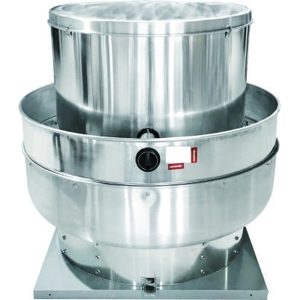 Exhaust Fans
Upblast Roof Exhaust Fan 32
Model RCU 32 Original price was: 14,950.00.14,030.00Current price is: 14,030.00. Need a quantity? Request a quote -
-8%
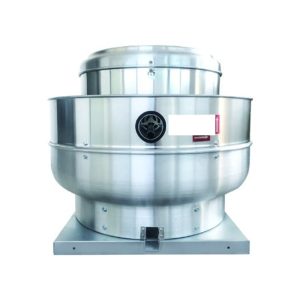 Exhaust Fans
Upblast Roof Exhaust Fan 16
Original price was: 6,785.00.6,210.00Current price is: 6,210.00. Need a quantity? Request a quote -
-11%
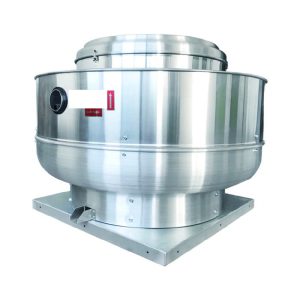 Exhaust Fans
Upblast Roof Exhaust Fan 5
Original price was: 3,220.00.2,875.00Current price is: 2,875.00. Need a quantity? Request a quote
Reviews
There are no reviews yet.